Guide
Is Viking Better Than KitchenAid? A Side-by-Side Look
Viking vs KitchenAid compared for Norwalk owners: burner power, oven and refrigerator design, warranty, parts and typical repair cost ranges.
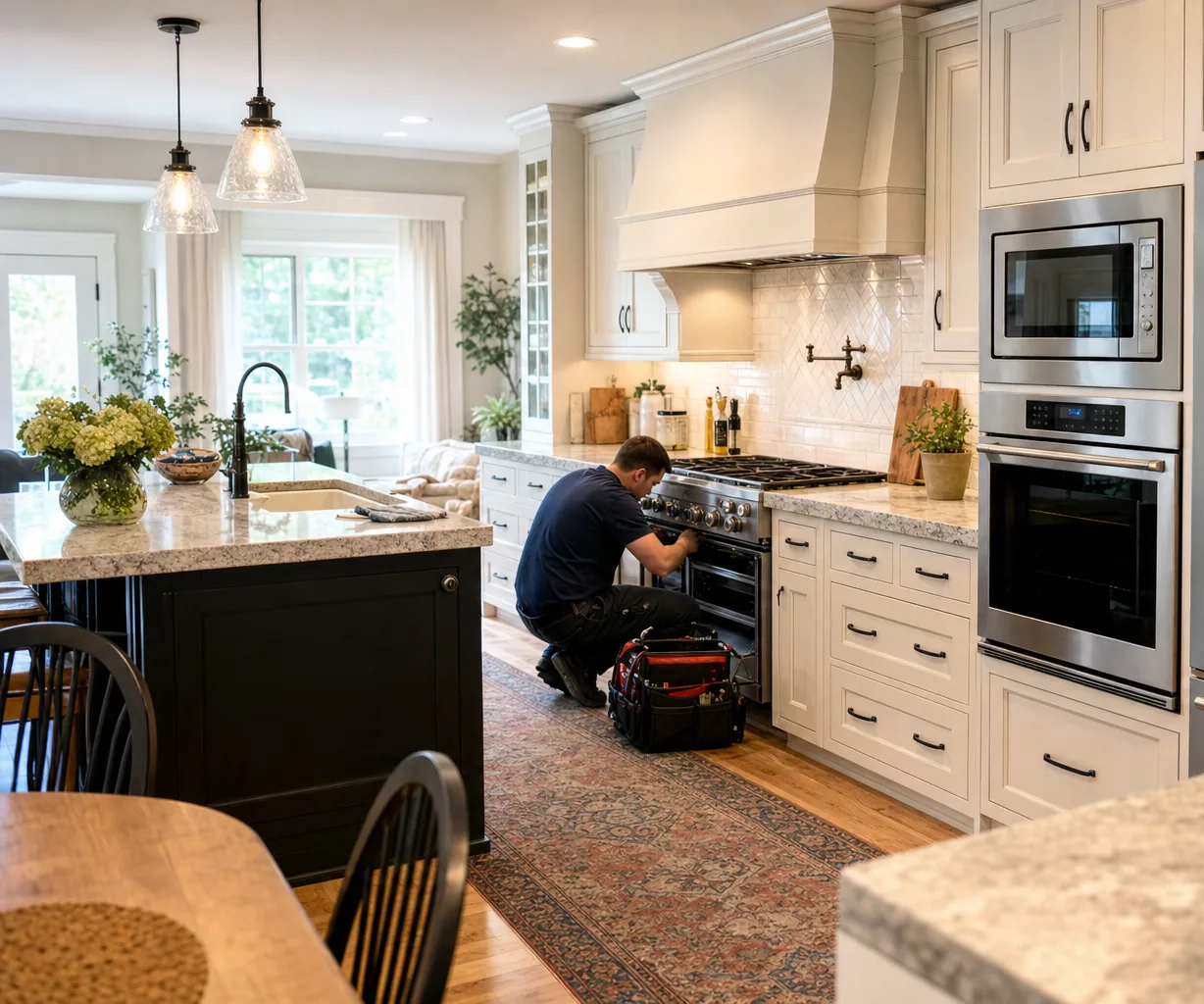
Viking is better than KitchenAid if you want pro-level cooking heat, since its 7 Series ranges put 23,000 BTU burners across the front of every width. KitchenAid is the better pick if you want solid, well-designed appliances at a lower price, with parts that are easier to find and a wider choice of French door refrigerators and wall ovens.
This guide covers ranges, ovens, cooktops and refrigerators, not stand mixers or cookware.
How do Viking and KitchenAid ranges compare on cooking power?
Burner output is where Viking pulls ahead. Viking 5 Series gas ranges use 15,000 BTU sealed burners (12,500 BTU on LP), and select models add a TruPower Plus front-right burner that reaches 18,500 BTU on natural gas or 16,600 BTU on LP. The 7 Series goes further with Elevation Burners: 23,000 BTU burners along the front, several 15,000 BTU burners in back and one 8,000 BTU burner for simmering. Because those ports sit raised, spills are less likely to bake onto the deck.
KitchenAid’s commercial-style ranges give you the pro look and convection baking for less money; burner layouts vary, so compare the exact model’s spec sheet with the Viking numbers above. For everyday sautéing, pasta and baking, both cook well. For searing, stir-frying or several big pots at once, Viking’s extra front-burner heat shows. The trade-off is more igniters, valves and spark modules to keep clean, common reasons for a range repair visit on any pro-style range.
Which is built better: Viking or KitchenAid refrigerators?
For built-in refrigeration, Viking’s design is more specialized. Viking 5 Series built-in refrigerators run one variable-speed DC compressor with the ProChill system, while 7 Series units use two so the fresh-food and freezer sections run independently. Viking says all of them hold within 1° of the set temperature.
KitchenAid’s strength is choice: freestanding and counter-depth French door models, bottom-freezer units and built-in options that cost less than a Viking built-in. For most households that is plenty; Viking earns its price in a fully integrated built-in matched to a pro-style range.
How do their wall ovens and cooktops differ?
Viking draws a clear line between fuels. It says its gas ovens, with the Gourmet-Glo infrared broiler, suit broiling and single-rack baking, while its electric ovens, with the Vari-Speed Dual Flow convection system, handle multiple-rack baking better. If you bake three sheets of cookies at once, electric or dual-fuel suits you better than all-gas.
KitchenAid is strong in wall ovens and induction cooktops. One display owners often mistake for a fault: an “H” on a KitchenAid induction cooktop only means that zone is still hot, even if a neighboring zone or a hot pan warmed it. It clears once the zone cools, so no service call is needed.
Which brand is more reliable and easier to service?
Neither brand is trouble-free; what differs is the kind of service. Viking’s pro-style ranges have more mechanical parts (igniters, spark modules, valves, bake and broil elements, convection fans), so wear tends to show up there. KitchenAid appliances lean more on electronic controls and sensors, and its French door refrigerators share the usual ice maker and defrost issues of that style.
KitchenAid parts are generally easy to source, while Viking parts are more specialized, so an uncommon one can take longer to arrive. Before you call, find the model and serial label: on KitchenAid French door, bottom-freezer and top-freezer refrigerators it sits inside the fresh-food section on the left, and on side-by-sides on the right.
On warranty, KitchenAid’s help center says its limited warranty typically runs one year from purchase, depending on the appliance type, so read your model’s own paperwork. For a Viking, check the warranty sheet that came with the unit.
| Comparison point | Viking | KitchenAid | What it means for you |
|---|---|---|---|
| Top burner output | 23,000 BTU front burners (7 Series) | Varies by model | Viking suits high-heat cooking |
| Built-in refrigeration | One compressor (5 Series) or two (7 Series) | Wide French door and built-in lineup | Viking for tight control, KitchenAid for choice |
| Ovens | Gas for broiling, electric for multi-rack baking | Wall ovens and convection ranges | Match the fuel to how you bake |
| Parts | More specialized | Widely available | A Viking repair may wait on a part |
What do repairs typically cost on either brand?
Repair cost depends on the fault, not the badge. Typical ranges:
- Diagnostic / service call: $95–$149, credited toward the repair
- Oven igniter / bake element: $250–$500
- Refrigerator repair (common faults): $300–$750
- Sealed-system / compressor repair: $800–$2,200
The firm quote is given on site after diagnosis; see repair pricing for the full list.
Which should a Norwalk kitchen choose?
Pick Viking if cooking is the center of the house and you want pro heat with a matched built-in refrigerator. Pick KitchenAid for a well-equipped kitchen for less. In South Norwalk, East Norwalk and Rowayton, salt air off Long Island Sound can leave tea-colored spots on stainless of either brand, so wipe and dry the fronts with a stainless cleaner.
Norwalk Viking Appliance Repair is an independent service, not manufacturer-authorized, working on Viking and KitchenAid appliances across Norwalk, Darien, Westport and Wilton. Call (475) 281-3784.
Frequently asked questions
Are Viking appliances good quality?
Yes, Viking builds heavy, pro-style appliances with high-output burners and built-in refrigerators that hold within 1° of the set temperature. Like any pro-style equipment, they need periodic service on igniters and elements.
Which brand is better than KitchenAid?
For pro-style cooking, Viking, Wolf, Thermador and Monogram are the usual step-ups; for built-in refrigeration, Sub-Zero, Viking and Thermador.
What is comparable to Viking appliances?
Wolf, Thermador, Monogram and Dacor make pro-style ranges in the same class, and Sub-Zero and Miele make comparable built-in refrigeration.
Is a Viking worth repairing instead of replacing?
Usually yes for igniter and element faults, which typically run $250–$500. A sealed-system repair at $800–$2,200 deserves a closer look at the unit’s age, and the firm quote is given on site after diagnosis.